Most commercial overhead door failures do not arrive as a surprise. They build over weeks as a warehouse runs a sectional door through cycle after cycle, and the warning signs get ignored until the morning the door will not move. A door that has started binding, running rough, or closing crooked is telling a facility manager something, and reading those signs early turns an emergency into a scheduled commercial door repair. A-24 Hour Door National Inc. handles both across Buffalo and Western New York.
A sectional overhead door, the panel-and-track type on most warehouses and service garages, is a balanced machine. Springs counter the door's weight, cables transfer that force, rollers steer the panels, and an operator drives the whole assembly. When any one part drifts out of spec, the others take more load, and the failure cascades. Understanding where these doors break helps a Buffalo warehouse catch a problem while it is still a repair rather than a shutdown.
The torsion springs above a sectional door carry its full weight, and they are the most load-bearing part of the system. A spring has a working life measured in cycles, and a high-traffic Buffalo dock door reaches that limit faster than a light-use door. A broken spring leaves the operator lifting a weight it was never sized for, which either stalls the door or burns out the motor. Cables that fray, stretch, or come off their drums throw the door out of balance and can let one side drop. Springs and cables are not parts to work on without training, because they hold serious stored energy, which is why this belongs with a commercial door repair technician.
Buffalo winter accelerates spring and cable wear in an indirect way. When cold stiffens the door and grease thickens in the tracks and rollers, the springs and operator work harder on every cycle to move a door that no longer runs freely. That added strain shortens the life of the whole drive system. A door that drags in January is not just annoying; it is aging its own components faster, which is why cold-weather roughness is worth a service call.
The panels ride on rollers that run in tracks, and this is where impact damage and alignment problems show up. A forklift or a backing truck that clips a sectional door bends a panel or knocks the door off its track, and a door off track will bind, run crooked, or fall. Worn rollers develop flat spots and drag, pulling the door out of alignment over time. Bent or loose track lets the rollers wander. Salt and moisture tracked into a Buffalo warehouse corrode the track and hardware, and a corroded track no longer steers the rollers cleanly. Each of these forces the door out of true, and a door that is not square wears everything faster.
Dented or cracked panels are both a cosmetic and a structural problem. A damaged panel weakens the door and can let cold air and snow through the gap, which matters in a Buffalo winter. On many sectional doors, a single damaged panel can be replaced rather than the whole door, which keeps a commercial door repair manageable relative to a full replacement. A technician judges whether the panel is a swap or the door needs replacing.
The operator is the motor and drive that lifts the door, and on a commercial building it works hard. Operators fail from worn gears, burned motors, failed logic boards, or from being overworked by a door that drags. On automatic and operator-driven doors, the safety systems, the photo-eyes and reversing edges that stop a door on an obstruction, are a code and liability matter, and they have to work correctly. A-24's AAADM-certified technicians handle the operator and its safety devices together, so the door moves and also stops when it should. Ignoring a failing operator on a heavy commercial door is a safety risk, not just an inconvenience.
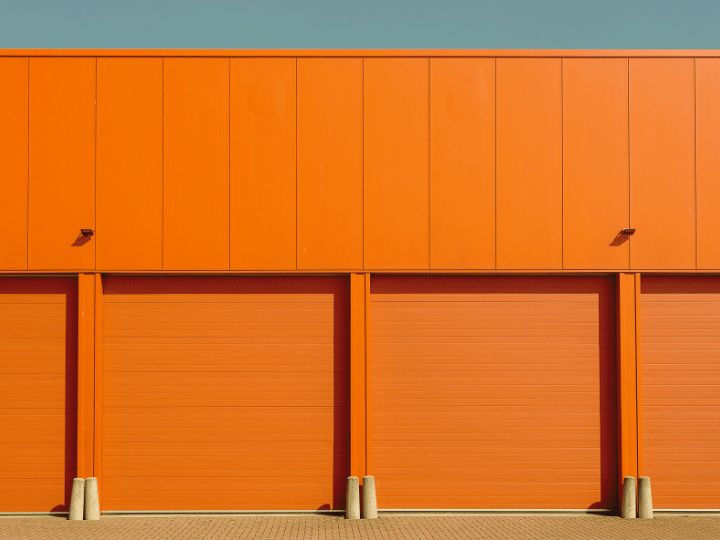
A sectional door balances springs, cables, rollers, and an operator, so when one part drifts out of spec the others take more load and the failure spreads, which is why reading the whole system catches a problem a single-part fix would miss.
When Buffalo cold stiffens the grease and the door runs rough, the springs and operator work harder on every cycle, so winter roughness is not just a nuisance but a condition that shortens the life of the drive system.
Torsion springs carry a commercial door's full weight and store serious energy under tension, which is why a broken spring is one of the most common failures and a repair that belongs with a trained commercial door technician, not a do-it-yourself attempt.
The warehouses that avoid the worst downtime are the ones that treat the early signs as a reason to call. A door running rough, closing crooked, making new noise, or dragging in the cold is a door on its way to a failure, and a scheduled commercial door repair in Buffalo costs far less than an emergency call with a dock backed up and trucks waiting. A technician who reads the springs, cables, rollers, track, and operator as one system catches the cascading failure at its start, which is the aim of good commercial door repair.
Many of the sectional overhead doors A-24 services in Buffalo sit on loading docks, and the dock context raises the stakes. A dock door is part of a system that includes the leveler that bridges the truck bed, the seals and shelters that close the gap around a trailer, and the bumpers that protect the building from impact. When the overhead door on a dock fails, shipping and receiving stop, and along the I-90 corridor and the Tonawanda industrial area, that halt ripples through a whole day's schedule. A contractor who handles the dock door and the leveler together keeps the whole opening working, which is why A-24 treats dock doors, levelers, seals, and bumpers as connected work rather than separate calls. Commercial door repair on a dock is about the opening as a system, not just the door panel.
The math on commercial overhead doors favors service before failure. A fall pre-winter visit that checks the springs, cables, rollers, tracks, operator, and safety systems, and that greases and adjusts the door before the cold sets in, heads off the mid-winter breakdown that stops a dock with trucks waiting. For a Buffalo warehouse running several overhead doors, a maintenance schedule spreads the cost, catches worn parts before they break, and keeps the doors moving through the hardest months. A-24 provides this preventive service alongside its emergency work, and for a facility manager it is the difference between planning a repair and reacting to a shutdown. The doors that fail at the worst time are almost always the ones that showed early signs and never got the service call.
A sectional overhead door usually gives warning before it quits, and a facility manager who knows the signs can turn a breakdown into a scheduled fix. A door that has started closing crooked or leaving a gap at one side points to a cable or spring going out of balance. A new grinding, scraping, or popping noise points to worn rollers, a dry track, or a hardware problem. A door that hesitates, reverses on its own, or runs slower than it did points to the operator or its safety systems. A door that drags harder as the temperature drops points to cold-stiffened grease and a drive system under strain. Each of these is the door asking for a service call, and each is cheaper to answer before the failure than after.
For a Buffalo warehouse running several sectional doors, the pattern is worth watching across all of them, because the doors that see the most cycles wear first. A quick fall service visit that checks and adjusts every door before winter heads off the mid-season breakdown that stops a dock. The warehouses that keep their doors moving through a Buffalo winter are the ones that read the early signs and call for commercial door repair while the fix is still small.
The goal on every one of these doors is the same: a door that opens and closes on demand, seats square, and stops safely when it should. A-24's technicians restore that on sectional overhead doors across Buffalo and Erie County, on a schedule or on an emergency call, whichever the situation needs.
A commercial overhead door is a system, and treating it as one is what separates a lasting repair from a quick patch. A-24 reads the springs, cables, rollers, tracks, panels, and operator together on every Buffalo sectional door, on a planned maintenance schedule or an urgent emergency call, so the door that goes back into service is balanced, square, and safe rather than only moving again for a day and failing again soon after.
A-24 Hour Door National Inc. answers 24/7 from 344 Sycamore Street in Buffalo, with stocked trucks that carry springs, cables, rollers, hinges, and operator parts to finish most sectional door repairs in one visit, and same-day service in most cases across Buffalo, Amherst, Tonawanda, Hamburg, Orchard Park, and the Erie County corridor. More than 30 years in the local market shows in how quickly a technician reads a Buffalo warehouse door. For scheduled or emergency commercial door repair in Buffalo, contact A-24 Hour Door National at (716) 894-2000 for service or a free phone quote.
Redirect to: